


Book
Surah Al-Kahf · complete bilingual text
The complete 110-verse text, with Uthmani Arabic, an English translation and individual verse recitation.
Arabic / English
All themes
Arabic Qur’an · M. M. Pickthall
A carefully organised library for the study of Surah Al-Kahf. Read the text, explore its concepts, compare commentaries and discover scholarship through one shared research space.
Search the collection by title, subject or author. Filter by type and language, or return to resources saved on this device.
Classical and contemporary reading.
Explore →Academic research and study notes.
Explore →Watch, listen and reflect in this page.
Explore →English explanations with Arabic anchors.
Explore →Choose a pathway to filter the resources and focus the dictionary. Foundations and the closing judgement passages connect all four accounts.
All 29 headings from the original Turkish dictionary, expanded into 169 English concept and theme cards. Arabic wording, Turkish labels and verse references remain connected.
Explore 910 indexed Arabic written forms in the supplied Uthmani text, including the opening basmalah. This is a word-form concordance, not a count of unique roots. Select a form to read all the verses in which it appears, with English translation.
A reading shelf spanning the complete text, five classical tafsir works, a study guide and contemporary bibliographic records.
The complete 110-verse text, with Uthmani Arabic, an English translation and individual verse recitation.
Arabic Qur’an · M. M. Pickthall
A classical commentary attentive to transmitted reports, Arabic usage and differences of interpretation.
Abu Ja‘far al-Tabari
A classical commentary that relates Qur’anic passages to transmitted reports and other verses.
Ibn Kathir
A classical reference combining linguistic, exegetical and legal discussion.
Al-Qurtubi
A classical commentary useful for comparing narrative reports and explanations.
Al-Baghawi
A concise Arabic commentary focusing on meaning, guidance and moral reflection.
Abd al-Rahman al-Sa‘di
A 61-page learning guide to themes, narratives and the opening passages of the surah. Its interpretive and hadith references can be compared with primary sources.
AlHidaayah
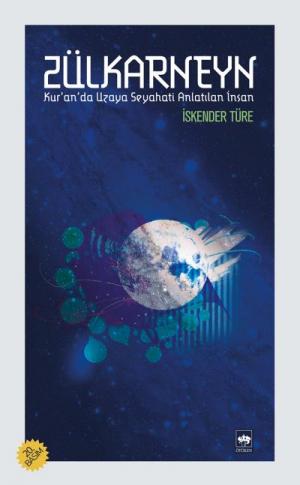
A contemporary space-travel interpretation of the Dhul-Qarnayn narrative. This is a proposed reading, distinct from an established identification or scientific demonstration.
İskender Türe
A modern commentary listed in the scholarly bibliography for the surah. This record presents bibliographic information; no complete digital copy is supplied.
M. Quraish Shihab
Publisher-hosted research, the Institute’s original Turkish PDFs and clearly identified editorial study notes.
A thematic study of trials of faith, wealth, knowledge, arrogance and authority across the surah.
Maria Fawaz Abu Assaf
A study of 18:32–44 that relates the gardeners’ dialogue to intertextual connections and contemporary youth lifestyles.
Fatkhiyatus Su’adah
Research on the purposes of the surah’s stories and parables using Ibn ‘Ashur and al-Maraghi as primary tafsir sources.
Rifa’atul Mahmudah Emha · Muhammad Ulinnuha · M. Ziyad Ulhaq
A comparison of five modern and contemporary commentaries on the identity and meaning of Moses’ young companion.
Fitri Meliani
A thematic study of detachment from worldly excess in al-Sha‘rawi’s interpretation of the surah. The bibliographic record is supplied here.
Qonitatu Zulfatu Rohmah · Averosian Sophia Al-Madany · Aqdi Rofiq Asnawi · Mahmud Rif’anuddin
A critical study of audiovisual interpretation associated with Husain Basyaiban. This reading record invites comparison of text, commentary and media presentation.
Jurnal Semiotika-Q · bibliographic record
An original PDF listed in the Turkish Library collection. The original Turkish document is retained for study alongside the English concept dictionary.
Al Kahf Institute archive
An original PDF listed in the Turkish Library collection. The original Turkish document is retained for study alongside the English concept dictionary.
Al Kahf Institute archive
An original PDF listed in the Turkish Library collection. The original Turkish document is retained for study alongside the English concept dictionary.
Al Kahf Institute archive
The original Turkish Library PDF on mercy as a shared theme of the narratives.
Al Kahf Institute archive
An existing Institute article preserved in an in-page archive reader. The public article does not display a verified author line.
Al Kahf Institute archive
An existing Institute article preserved in an in-page archive reader. The public article does not display a verified author line.
Al Kahf Institute archive
An existing Institute article preserved in an in-page archive reader. The public article does not display a verified author line.
Al Kahf Institute archive
The four major narratives can be read as distinct situations of responsibility: threatened faith, material prosperity, the pursuit of knowledge and the exercise of power. Their contexts differ, but mercy, guidance and accountability connect them.
Library editorial study note
The cave account connects a deliberate act of refuge with prayer for mercy. It then places the young believers’ limited estimate of elapsed time beside the larger count disclosed in the narrative.
Library editorial study note
The gardens are flourishing before the owner makes claims about his superior possessions and their permanence. The criticism is directed toward the confidence and disbelief expressed in his dialogue, rather than toward agriculture or prosperity as such.
Library editorial study note
Moses asks to learn and is warned that patience will be difficult when the relevant knowledge is not yet available. The successive objections preserve his moral concern while revealing the limits of his immediate information.
Library editorial study note
The narrative presents a figure granted capacity who responds to communities and a request for protection. His response to the offered payment emphasises practical cooperation and the capacity already entrusted to him.
Library editorial study note
Begin with the Arabic passage and identify its immediate setting. Record the English translation used, recognising that different translators may make different lexical choices. Then compare commentaries and ask what kind of evidence each explanation uses.
Library editorial study note
Mercy appears in the youths’ prayer and their anticipated refuge, in the description of God’s forgiveness, in the servant’s gift of knowledge, in the protection of the orphans and in Dhul-Qarnayn’s completed work.
Library editorial study note
The surah contrasts temporary adornment with enduring righteous deeds. Its judgement scenes describe a complete record and deny injustice, then contrast efforts that go astray with the promised gardens.
Library editorial study note
Full recitation, individual verse listening and published conversations. Every player opens within this page.
The full recitation already hosted by the Institute. Playback remains in the Library window.
Sheikh Badr Al-Turki · institute audio archive
Listen to any of the 110 verses with the Arabic text and English translation. Previous, next and continuous listening controls are included.
Mishary Rashid Alafasy

A Qur’an 30 for 30 conversation, including reflections on the enduring righteous deeds and other themes of Al-Kahf.
Dr. Tamara Gray · Sh. Mowlid Ali · Yaqeen Institute

A conversation connecting faith, divine preservation and the journey of Moses with the themes of the sixteenth juz.
Roohi Tahir · Dr. Omar Suleiman · Sh. Abdullah Oduro · Yaqeen Institute

A Turkish programme presenting contemporary interpretations of mysterious Qur’anic narratives, including the space-travel perspective.
Pelin Çift · İskender Türe · Gündem Ötesi

The recitation video previously selected for the Institute’s home page.
QuranicVoice

A broader astronomy and faith conversation for readers exploring the Institute’s space research pathway. This episode is not solely about Al-Kahf.
Dr. Aycha Tammour · Mohamad Zaoud · Yaqeen Institute
Begin with the Arabic passage and its setting. Compare translations and commentaries, record the source of historical claims, and distinguish established information from a contemporary hypothesis.
All 29 original headings are indexed. Published English companion pages are loaded in full inside the archive reading window. Entries previously marked “Coming soon” have new contextual notes. The unavailable Zekiyye and Wall links are replaced by verse-based entries.
No. The Qur’anic text, public classical commentary readers and supplied PDFs have reading views. Commercial books are represented through an authorised preview or a bibliographic record. Each card states its access type.
Arabic: the Uthmani edition supplied by AlQuran Cloud. English: M. M. Pickthall’s translation (1930), retained from the Institute’s home page. Verse audio: the Islamic Network ar.alafasy edition. The full MP3 is the Institute’s existing Badr Al-Turki archive.
The old essays include interpretations concerning nebulae, space travel and energy fields, along with historical and scientific background. Preserving these essays does not turn every assertion into a verified fact or a consensus of Qur’anic interpretation.
Books, papers, recordings and research proposals can enrich the collection. Include the author, publication details, language and permission or public access status.